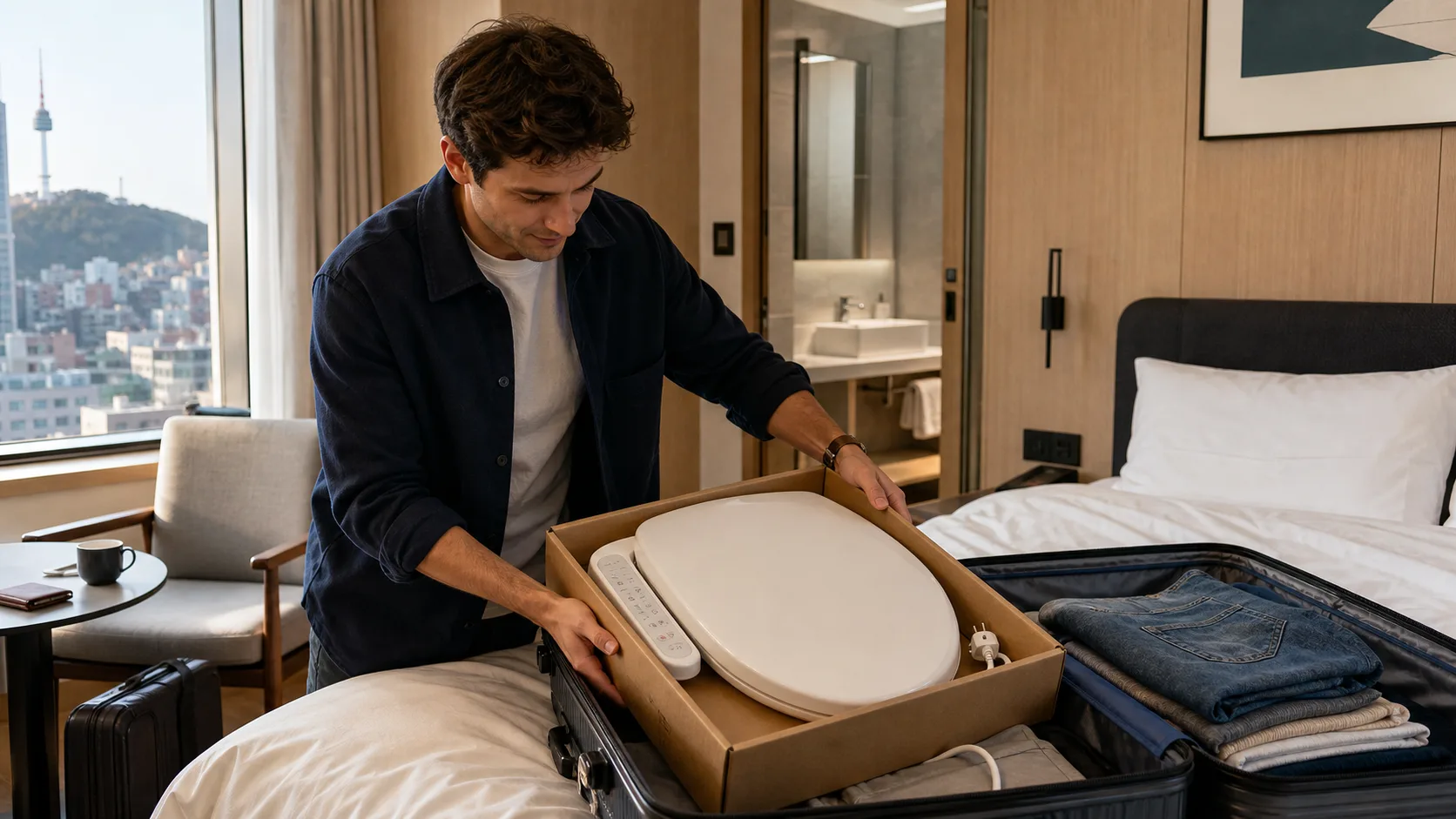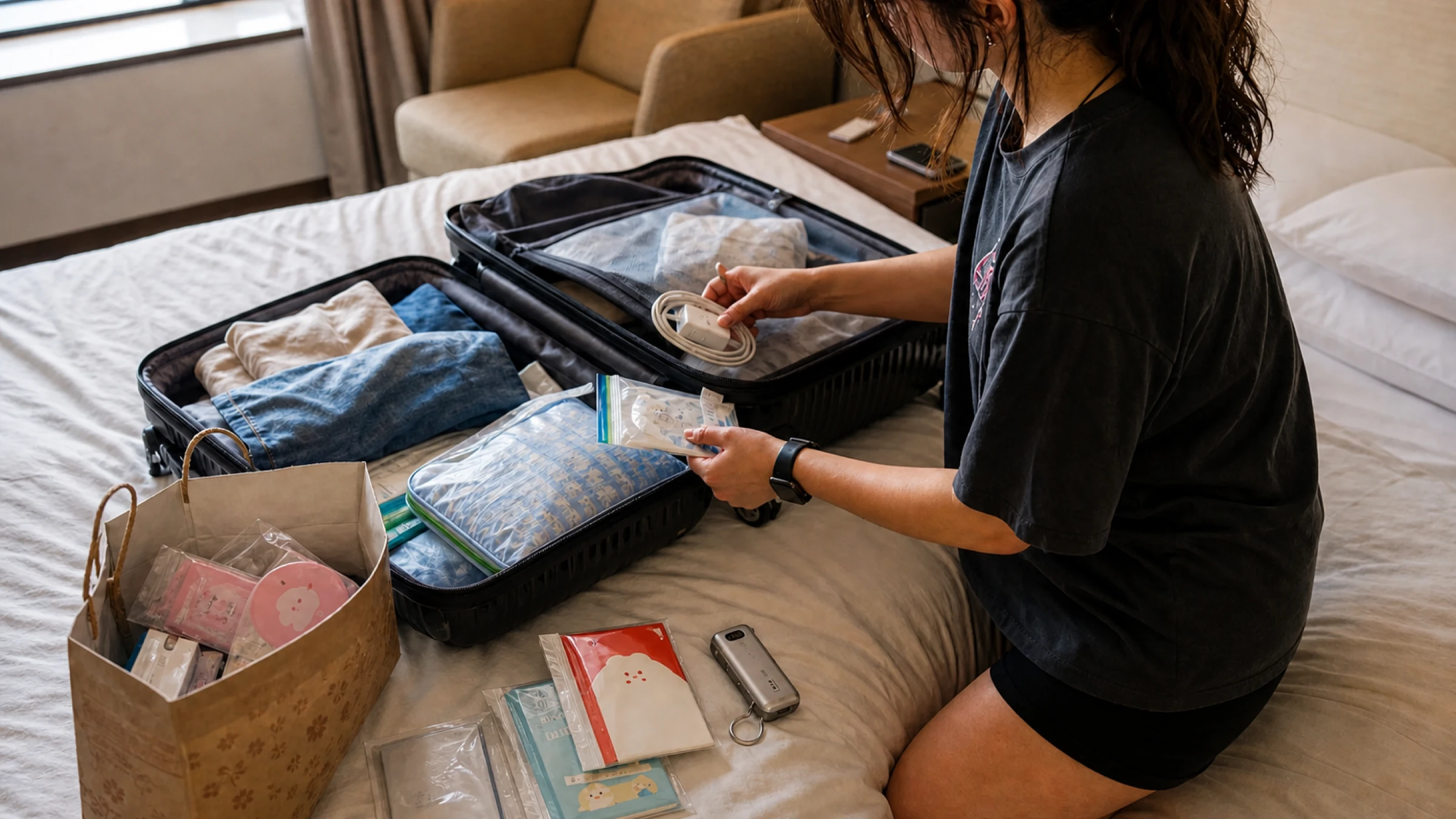
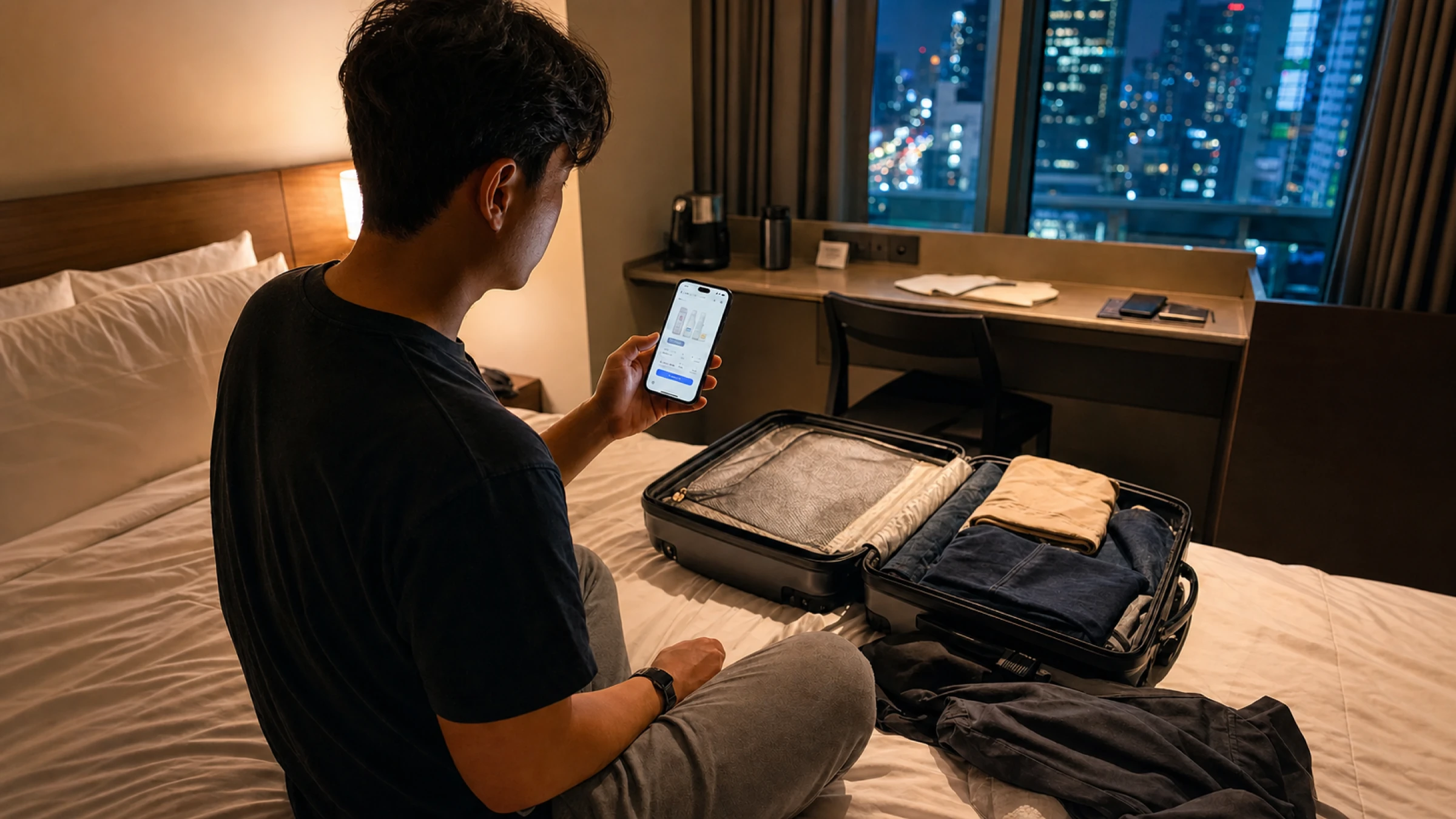
It is 11:07 p.m. The suitcase is open on the hotel bed, which is how suitcases announce that checkout is getting close.
On your phone is the skincare set you could not find in Myeongdong. The exact bundle is online. One line beneath it says it can arrive tomorrow. You check the booking again: checkout is Thursday.
The dates fit. The payment screen does not.
This is where a short shopping problem becomes a Korean identity-verification problem. The product is sitting a few kilometers away. You can see its price, choose its option, and watch the delivery promise change. You still cannot give the screen the kind of person it expects.
The best thing you can buy on Coupang is an afternoon.
The set is only what arrives in the box. The afternoon is the trip to three branches, the sold-out shelf, and the detour back to the hotel that you no longer have to make.
Buy back the detour
One traveler wanted a new collection delivered to a Seoul hotel so the trip could stay about culture and food rather than shopping streets. Another wanted skincare, cosmetics, and snacks delivered because their travel companion did not enjoy shopping. Those are better shopping lists than “things that are cheap online.”
A good hotel order gives time back.
It might be the refill you already use, an online bundle you could not find on the shelf, a fixed-model charger cable, a small Korea-only release, or gifts that would otherwise require another pass through a busy district. You already know what the object is. Delivery removes the hunt.
The weaker orders create a second job. Shoes whose size you are guessing. A jacket that needs a mirror. A high-value device you would want time to inspect and return. A bottle so large that the suitcase must now negotiate with it.
Ask one question before sending the link: does this item return more travel time than it consumes?
A convenience store can solve toothpaste at midnight. Coupang becomes interesting when the exact item is online, the route to find it is annoying, and the box can meet you before checkout.
Read the arrival line before the product
Coupang trains the eye to look below the price. The first pass is visual: the blue 로켓배송 (Rocket Delivery) badge, a Wow line promising 새벽도착 (dawn arrival), or the orange 판매자로켓 (Seller Rocket) badge.

Those marks get a product onto the shortlist. The arrival date decides whether it works for your trip. Coupang’s own Wow membership guide makes the same distinction: same-day and dawn delivery belong to items showing those arrival messages.
Change the hotel address and stock can change. Change the color and the arrival date can move. Wait until after a local cutoff and the same product can become tomorrow’s problem. Coupang explains that different addresses can point to different fulfillment centers, stock, and order deadlines.
Choose the exact color, size, count, or bundle first. Then find one of the Rocket signals above, read the arrival date for that option, and compare it with checkout. A bottle that arrives after you leave is a very small exhibit in the hotel’s lost-property room.
When those pieces line up, copy the product URL and send it to Staydrop. Rocket Fresh groceries, Rocket Global imports, installation items, and products without a Rocket signal use different delivery systems, so leave those out of the order.
A tourist SIM is a number, not an identity
The internet is full of sentences saying a foreigner can use Coupang. Many are true. They are just describing a resident.
A foreign resident with a valid residence card and a Korean mobile number registered in the same name can complete the domestic verification needed for Coupay. Even then, capitalization, spacing, and the order of the name have to agree across the residence card, mobile account, and Coupang account. This is why a person can spend ten minutes rearranging their own name as if it were a difficult password.
Coupang also says a Visa, Mastercard, or JCB issued abroad in the cardholder’s own name can be registered for Coupay payment. The foreign card is no longer the whole wall. Domestic identity verification remains the narrow door.
Even a tourist SIM with a Korean-looking number can be the wrong key for this identity check. In one travel thread, the hotel had already agreed to receive the parcel; the order still stopped at the Korean-phone requirement. Other travelers comparing hotel-delivery services describe the same gap between having a number and having a verified domestic identity.
That is the moment Staydrop is built for. You send the product link from your side of the screen. Staydrop handles the verified Korean purchase and domestic delivery on the other side.
Let the hotel into the order
The hotel is part of the delivery, not merely the address pasted at the end.
Confirm the hotel’s parcel policy and label format before ordering. Ask whether it accepts parcels for current or arriving guests, how early a parcel may arrive, and where it will be held. Use the same recipient name that appears on the reservation. Staydrop’s order form asks for that match because the front desk needs to connect a label on a box to a human in a booking system.
Travelers who have done this often begin with the hotel, not the shop. In one recent Korea-travel discussion, the useful answer was wonderfully short: email the lobby and have the booking confirmation ready.
If the trip changes hotels, use the stay with the calmer calendar. The last Seoul or Gyeonggi hotel often gives the parcel more time to arrive and gives you fewer addresses to confuse. The best address is the one where you will still exist when the box does.
Staydrop’s standard order clock runs ahead of Coupang’s bright arrival badge. The quote must be confirmed by 6:00 p.m. KST two calendar days before checkout, and payment must first be detected by 8:00 p.m. that day. A Friday checkout makes Wednesday the standard deadline. This buffer leaves room to verify the item, payment, purchase, and hotel handoff instead of betting the trip on the fastest possible outcome.
Put the whole basket on the bed
Coupang shows the item price. Staydrop shows what it takes to put the item at the hotel.
The minimum item subtotal is ₩50,000. Staydrop adds a 25% service fee to the order subtotal and ₩10,000 for hotel delivery. A basket at the minimum therefore reads:
Items                 ₩50,000
Service fee (25%)     ₩12,500
Hotel delivery        ₩10,000
─────────────────────────────
Total                 ₩72,500
You review the full KRW breakdown before payment, then pay through a supported USDT or USDC network. The exchange rate and item snapshot are fixed when the invoice is created.
This changes the comparison. A ₩50,000 basket does not compete with a ₩50,000 shelf price. It competes with the delivered total, the subway crossings, the possibility of another sold-out branch, and the hour when your companion begins looking at you as if sunscreen has ruined the holiday.
Some baskets should stay on the shelf. Others buy the afternoon cheaply.
Send the option, not the idea
Open the exact product page and choose the option you want. Check that one of the three Rocket signals still appears, then read the arrival date beside it for the hotel address. Now copy the URL.
Send the link and your email to Staydrop. After email verification, add the recipient name, accommodation, address, and checkout date. Staydrop checks the item, option, stock, price, delivery type, and realistic arrival before creating the quote. You see the item subtotal, service fee, hotel delivery, and total before choosing whether to pay.
The sequence matters because “the pink one” is an idea. The selected pink, 50-milliliter, two-piece set at one URL is an order.
Thursday morning
The suitcase is still open, but now it is losing the argument.
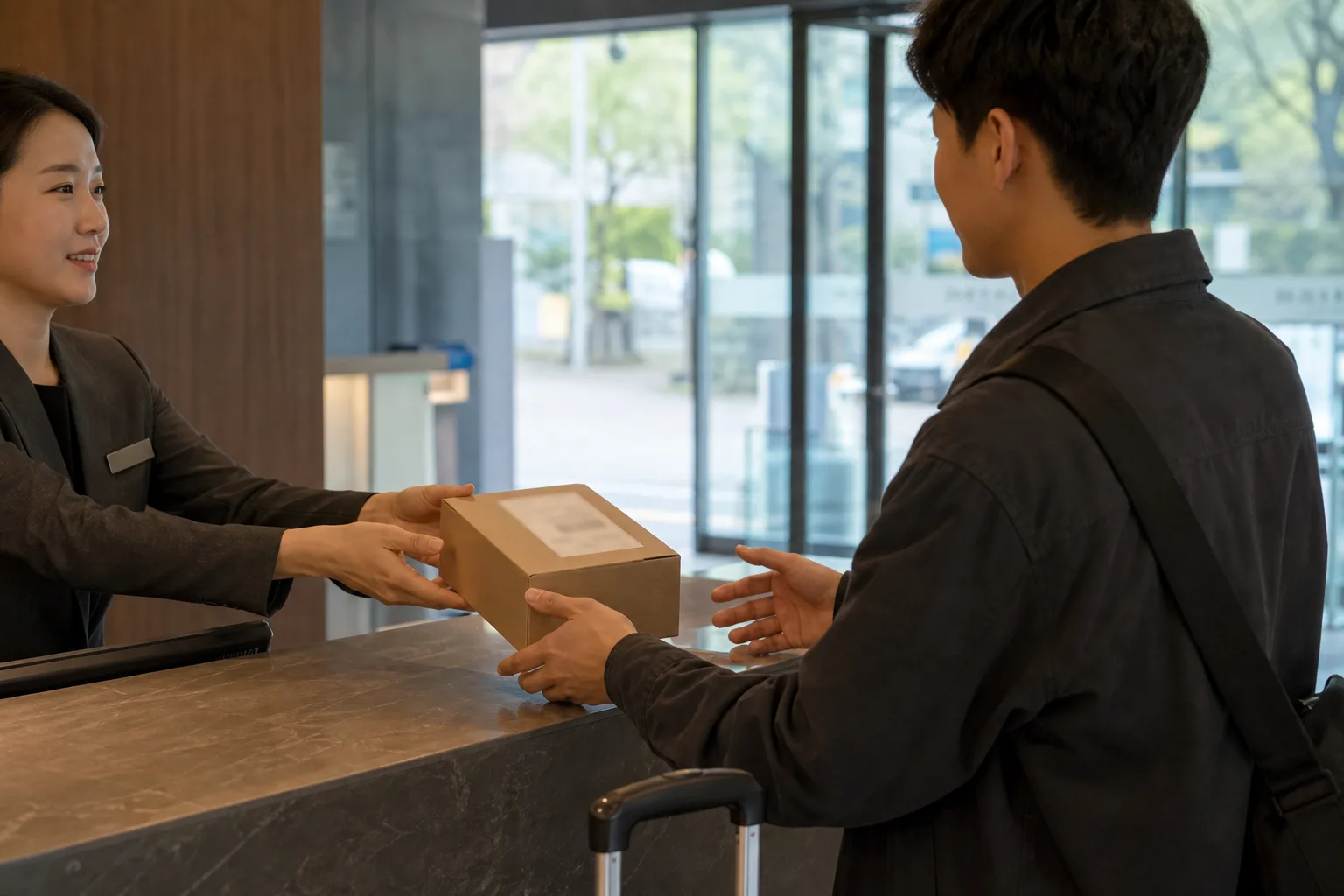
At the front desk, a small box is waiting under the same name as the room. Inside is the skincare set from Tuesday night. It arrived without a hunt through three branches, a shopping bag carried through dinner, or a favor requested from someone local.
The product is in the box.
The afternoon is somewhere else in Seoul.
Sources checked July 21, 2026: Coupang Newsroom payment, identity-verification, Rocket Delivery, stock, and address guidance; Coupang product and search pages; Naver PC and mobile integrated-search results for foreigner verification and hotel parcel receipt; public Korea-travel community threads about tourist ordering and hotel delivery; and Staydrop’s current eligibility, pricing, payment, service-area, and checkout-deadline policies. Scene images are AI-generated editorial illustrations created for Staydrop; the delivery-signal guide uses badge assets from Coupang’s current interface.