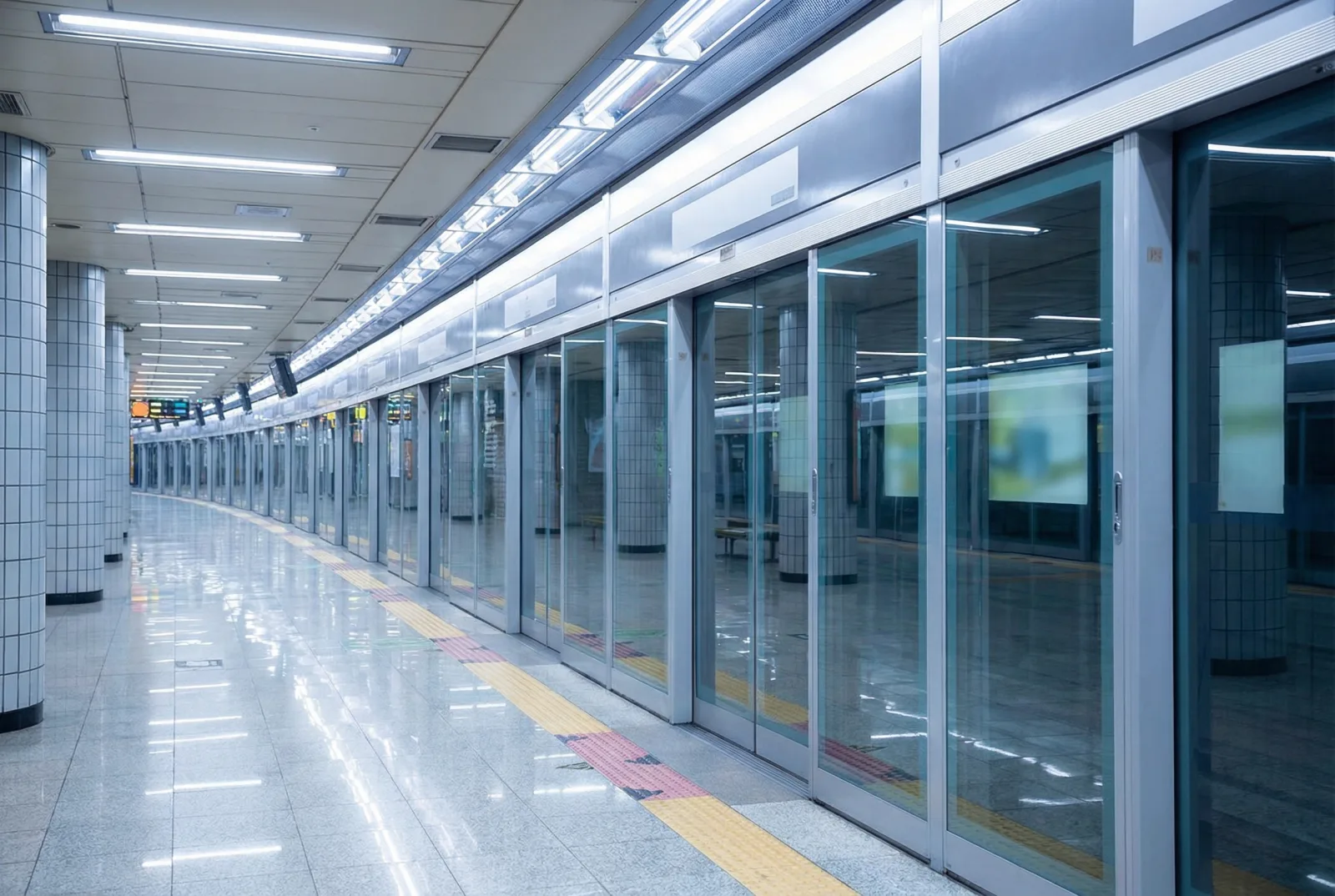
Seoul subway stations can feel complicated before the train even arrives. Large stations combine several lines, platforms on different floors, and more than ten exits. Platform signs use terminal stations to show direction, so the name above the platform can be unfamiliar.
Set the route in Naver Map before entering the station. Save the line number, direction, transfer station, and exit number. Inside the station, follow the colored line signs to the platform and the yellow exit numbers to the street.
Set the route before entering the station
Search from your current location to the exact destination in Naver Map. Check these details before going underground:
- subway line number and color;
- station where you board;
- direction shown by a terminal station;
- transfer station, if needed;
- destination exit number; and
- walking route from the exit.
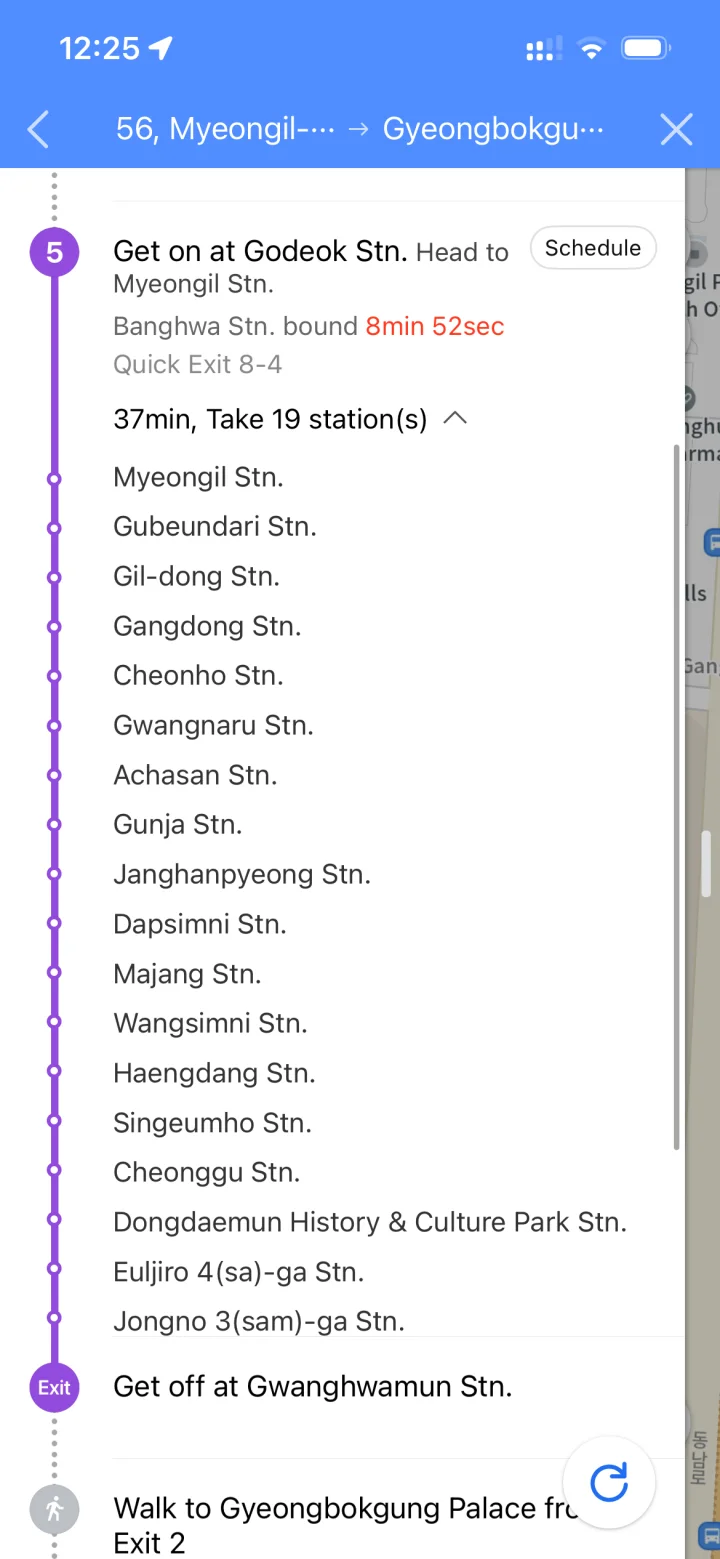
Take a screenshot of the route. It is faster to check a saved image while walking through a crowded transfer corridor.
The station number helps when names look similar. A colored circle containing 208, for example, identifies Wangsimni on Line 2. Seoul Station also has separate stations for Line 1, Line 4, AREX, Gyeongui–Jungang Line, and GTX-A. Match both the line and station number.
Choose a transit card
Tmoney, the Climate Card Tourist Pass, and WOWPASS all work at subway gates. Choose based on the rest of your trip.
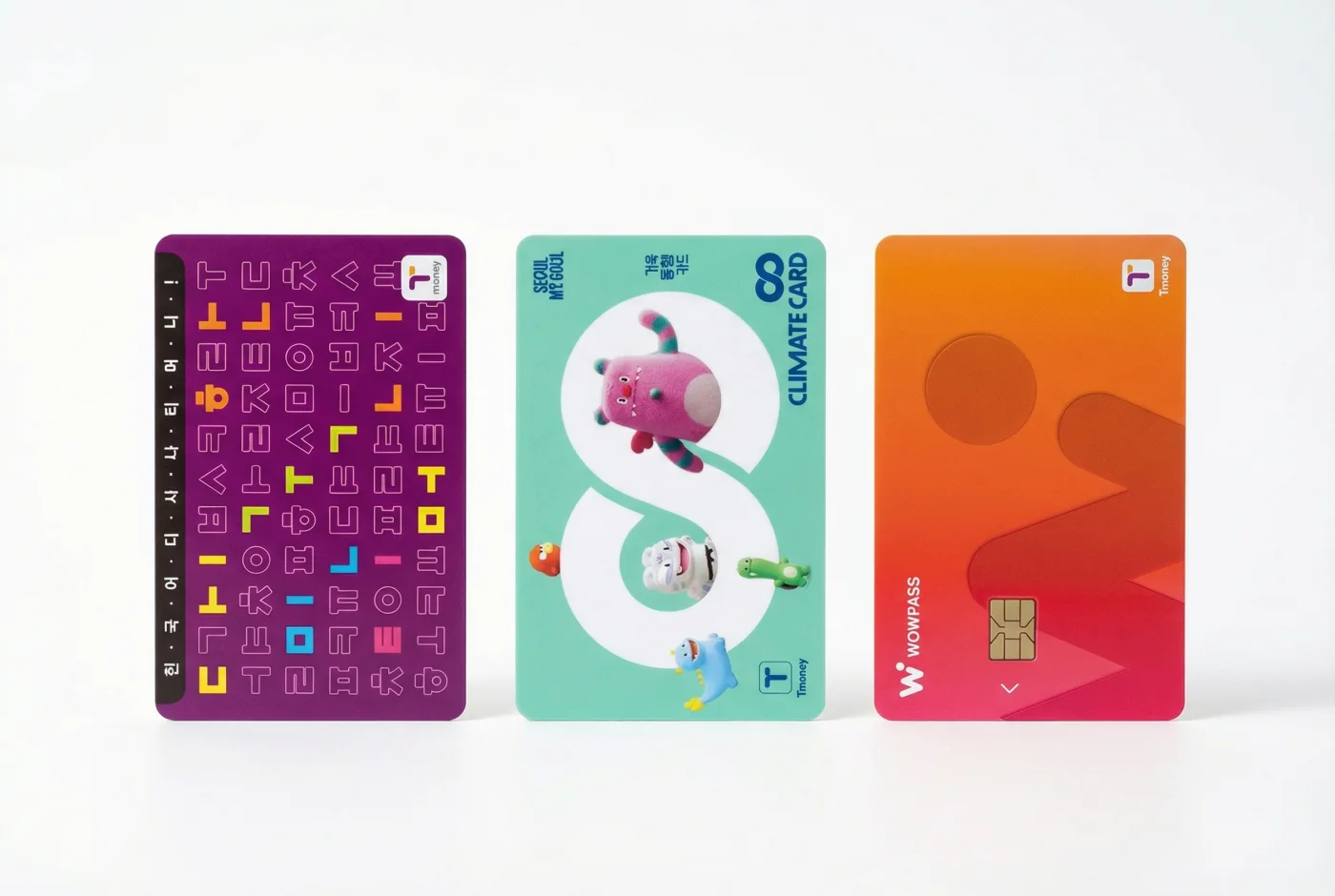
Tmoney: the practical choice for most trips
Buy a physical Tmoney card for an itinerary that includes Incheon Airport, destinations outside Seoul, or only a few subway rides each day. The same balance works on subways and buses in Seoul and in many other Korean cities.
CU, GS25, 7-Eleven, and other convenience stores sell Tmoney cards. Budget ₩3,000–₩5,000 for a basic card, plus the balance you load. Keep some Korean won for reloading the card at convenience stores and station machines.
Tap the same card when entering and leaving. On a bus, tap again before getting off so the transfer discount carries over to the next ride.
Climate Card: unlimited rides within Seoul
Choose the Climate Card Tourist Pass when you plan several subway and Seoul-bus rides every day. The short-term passes cost:
| Pass | Price |
|---|---|
| 1 day | ₩5,000 |
| 2 days | ₩8,000 |
| 3 days | ₩10,000 |
| 5 days | ₩15,000 |
| 7 days | ₩20,000 |
The physical card costs ₩3,000. The pass starts on the calendar day you load it, so load it in the morning. Check the Climate Card service area when your route reaches the edge of Seoul. For a trip starting at Incheon Airport, use Tmoney or an AREX ticket.
International Visa and Mastercard payments are available at the new ticket machines installed across Seoul Metro Lines 1–8. These machines charge an average 3.7% service fee for international cards. Look for the international-card logo on the machine; the city announcement lists the rollout details.
WOWPASS: shopping money and transit on one card
WOWPASS combines a Korean prepaid payment card with Tmoney. It suits travelers who also want to exchange currency or load shopping money with an international card.
WOWPASS keeps two separate balances. Load the Tmoney balance for subway and bus fares, and the WOWPASS balance for shops and restaurants.
Using an iPhone
Apple Wallet requires a South Korea-issued credit or debit card to create or reload Tmoney. Short-term visitors can buy a physical Tmoney card at a convenience store. Travelers with a Korean-issued card can follow Apple’s Tmoney setup instructions.
Choose the correct platform
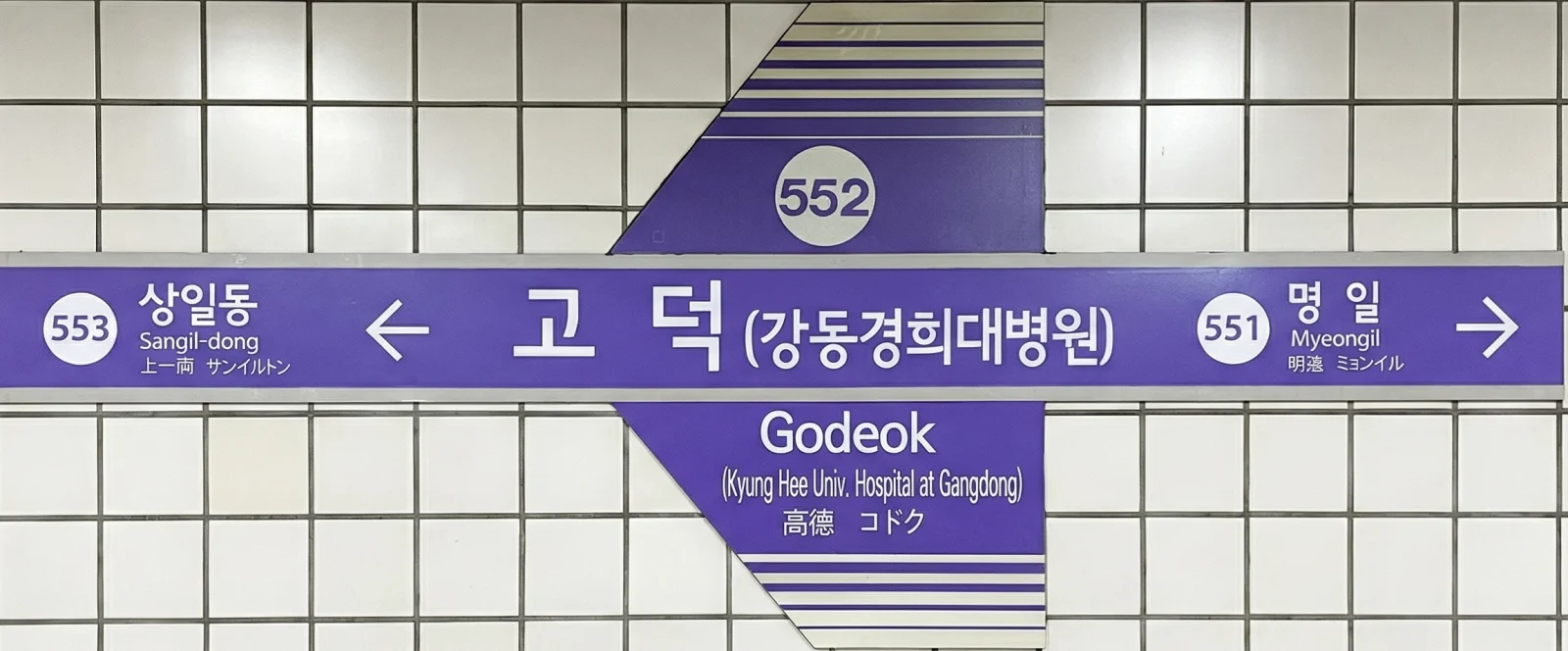
Platform signs name the terminal station for each direction. Naver Map shows the same terminal name beside your route. Match that name first, then check the next station.
At Godeok on Line 5, the wall sign shows:
552for Godeok;551for Myeongil in one direction; and553for Sangil-dong in the other.
For a route with Myeongil as the next stop, follow the arrow toward 551.
Use the next-station check on Line 2, the green loop. Match the next station in the app to the adjacent station on the wall sign.
Read the train display before boarding Line 1 and Line 9. Line 1 trains branch toward different outer destinations. Line 9 has all-stop and express services. Naver Map marks the service that reaches your stop.
Subway lines visitors use most
- Line 1, dark blue: Seoul Station, City Hall, Jonggak, Jongno 3-ga, and Dongdaemun. Trains branch after the central section, so read the destination on the arriving train.
- Line 2, green: Hongik University, Euljiro, Seongsu, Jamsil, and Gangnam. This circular line is marked as the inner loop or outer loop; match the next station in Naver Map.
- Line 3, orange: Gyeongbokgung, Anguk for Insadong, Apgujeong, and Express Bus Terminal.
- Line 4, light blue: Seoul Station, Myeongdong, Dongdaemun History & Culture Park, and Hyehwa.
- Line 5, purple: Gimpo Airport, Yeouido, Gwanghwamun, and the eastern neighborhoods.
- Line 6, brown: Itaewon, Hangangjin, Yaksu, and Hapjeong.
- Line 9, gold: Gimpo Airport, Yeouido, Express Bus Terminal, and Bongeunsa. Confirm whether Naver Map specifies an express or all-stop train.
- AREX, blue: Incheon Airport, Hongik University, and Seoul Station. Airport Express and all-stop trains use separate boarding areas and stopping patterns.
Follow transfer signs by line number
At a transfer station, follow the colored line number on overhead signs and floor markings. For Line 3, look for 3 or 3호선. Crowds split toward several lines and exits, so keep following your own line number.
Stay inside the fare gates during a transfer. Large stations can involve a long walk between platforms; Seoul Station, Jongno 3-ga, Express Bus Terminal, and Wangsimni need extra time.
When Naver Map shows a recommended car position such as 8-4, the first number is the car and the second is the door. Boarding there puts you closer to the transfer stairs or destination exit.
Seoul’s participating subway sections allow re-entry at the same station within 15 minutes. Use it after entering the wrong side or leaving for a restroom outside the gates. Tap out, return through the same station, and continue the trip. The 15-minute re-entry guide lists the participating lines and sections.
Follow the yellow exit number
Check the exit number in Naver Map before the train arrives. Inside the station, yellow signs lead to numbered exits.
Large stations stretch across several intersections. The selected exit determines which side of the road and which block you reach. Keep following the same yellow number through underground shopping areas and corridor junctions.
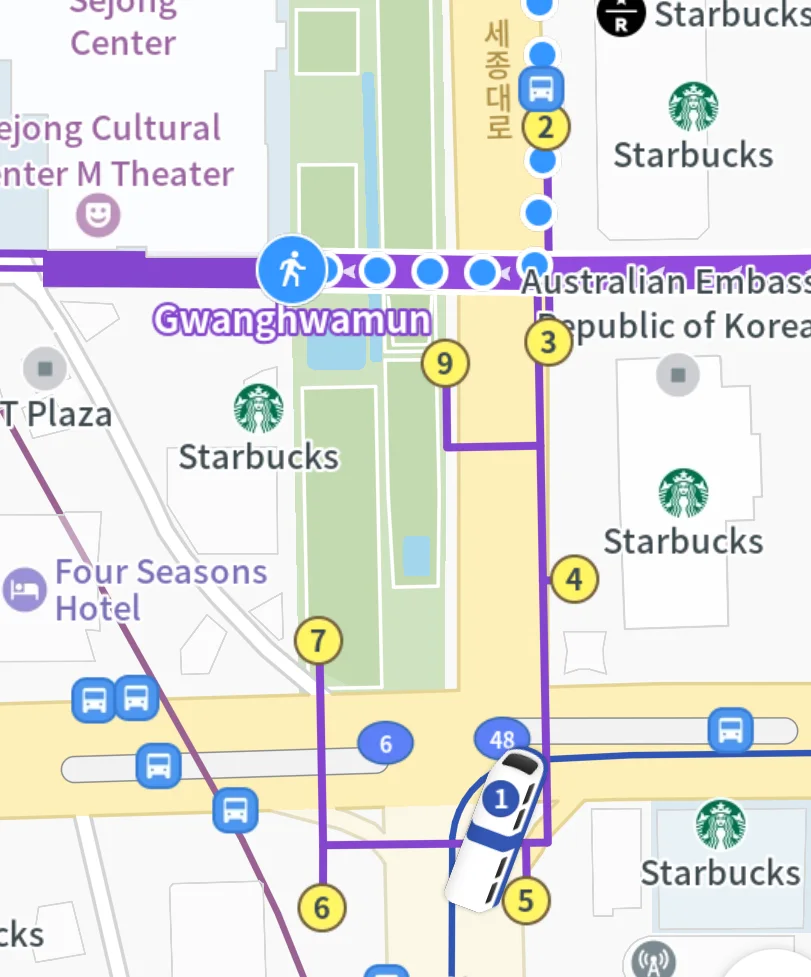
For a meeting, send station name + line + exit number:
Anguk Station, Line 3, Exit 2
With luggage or a stroller, choose an exit marked with an elevator. Set the walking route from the elevator entrance because it frequently occupies a different corner from the nearest staircase.
Stations that confuse Seoul locals too
Korean riders repeatedly ask for help with the same stations in Naver searches and community posts. Seoul City has also selected Hongik University, Seoul Station, Jamsil, Gangnam, and Sindorim for station-specific congestion and wayfinding improvements.
Seoul Station: choose the transport service first
Seoul Station connects subway Lines 1 and 4, AREX, Gyeongui–Jungang Line, GTX-A, KTX, and other mainline trains. Search the complete trip in Naver Map and follow the sign for the service name: Line 1, Line 4, Airport Railroad, GTX-A, or KTX. Allow extra time for a transfer between the subway, AREX, GTX-A, and the main railway concourse.
Hongik University: choose the line and exit together
Line 2, AREX, and the Gyeongui–Jungang Line occupy different parts of Hongik University Station. Exit 9 receives the largest crowd for the main Hongdae shopping streets, while Exit 3 leads toward Yeonnam-dong. Save the line and exit in the same screenshot and follow both signs from the platform.
Jongno 3-ga: the 1-to-5 transfer is the long one
Jongno 3-ga connects Lines 1, 3, and 5. The transfer between Lines 1 and 5 runs through a long corridor; Korean route questions and transfer guides repeatedly single it out. Add 10 minutes when that pair appears in the route. Transfers involving Line 3 are shorter.
Express Bus Terminal: match the terminal on the bus ticket
Express Bus Terminal Station connects Lines 3, 7, and 9 with two intercity bus buildings and the underground shopping mall. A ticket marked Gyeongbu or Yeongdong leads to Seoul Express Bus Terminal. A ticket marked Honam or Central City leads to Central City Terminal. Search the terminal name printed on the ticket and follow that name inside the station.
When something goes wrong
You reached the wrong platform
Compare the adjacent station on the wall with the next station in your route. Follow the signs to the opposite platform while staying inside the gates. At a participating station, the 15-minute re-entry rule also covers a trip through the gates.
The gate says your balance is too low
Look for a fare-adjustment or card-reload machine beside the gates. Add value and tap the same card again. Station staff can also direct you to the nearest machine.
The restroom is outside the gates
Check the restroom icon on the station map. For a restroom outside the paid area, use the 15-minute re-entry rule where it applies. Ask the staff beside the gate for the quickest route.
Your evening depends on the last train
Search the full route in Naver Map with your intended departure time. Check the final train for every transfer and the destination shown on the arriving train. Some late trains finish service before the end of the line.
Rush hour and carriage etiquette
Treat 7:30–9:00 a.m. and 5:30–7:30 p.m. on weekdays as congestion windows. Leave more time and let one crowded train go when the next arrives soon.
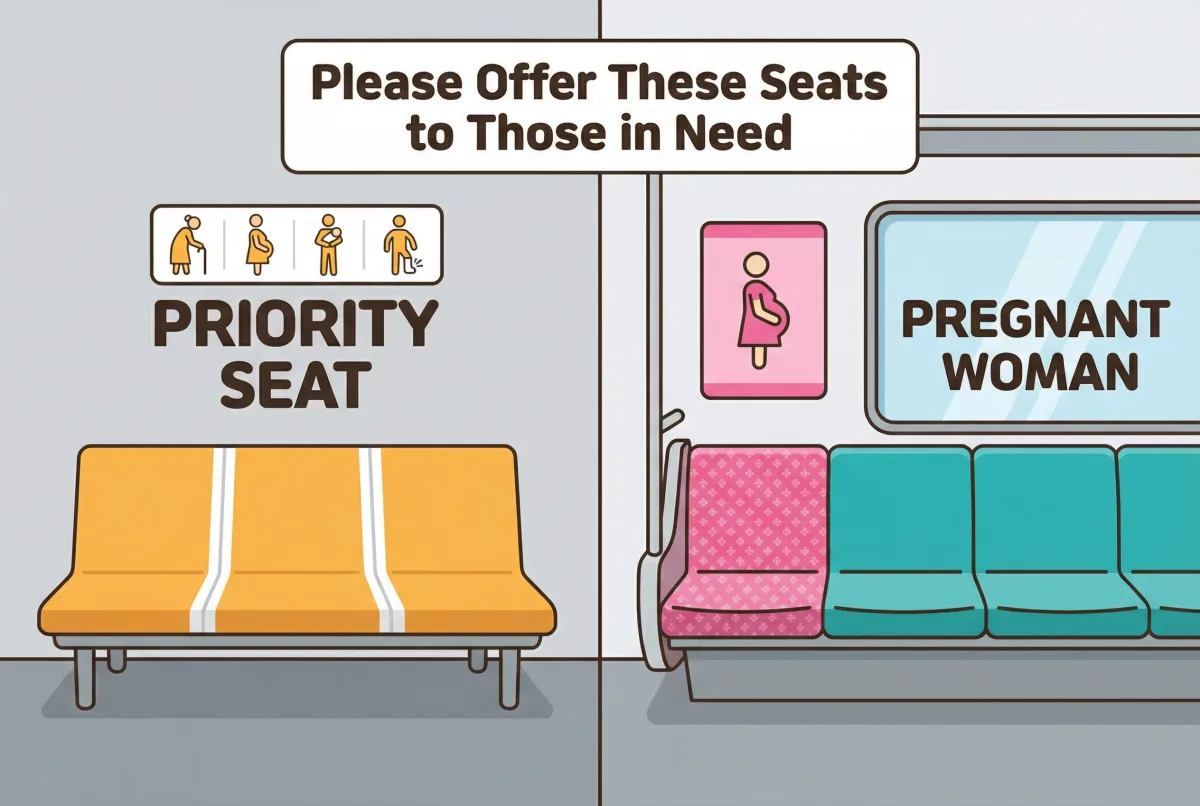
Keep the end-of-carriage priority seats available for older passengers, disabled passengers, and adults with infants. Leave the pink pregnancy seat open for a pregnant passenger, even when the carriage is full.
- Let passengers leave before you board.
- Move away from the doors after boarding.
- Hold a backpack in front of you or down by your legs in a crowd.
- Hold a suitcase in place on escalators and inside the train.
Announcements and electronic displays show station names in Korean and English. Compare the next station on the display with the saved route, then check the yellow exit number before getting off.